Gravel Driveway Installation in Aubrey, TX
New gravel driveways built right on Denton County clay. Crushed limestone, crusher run, and proper base depth for North Texas conditions. Free on-site estimates.
New Gravel Driveways Built for Aubrey TX Soil and Climate
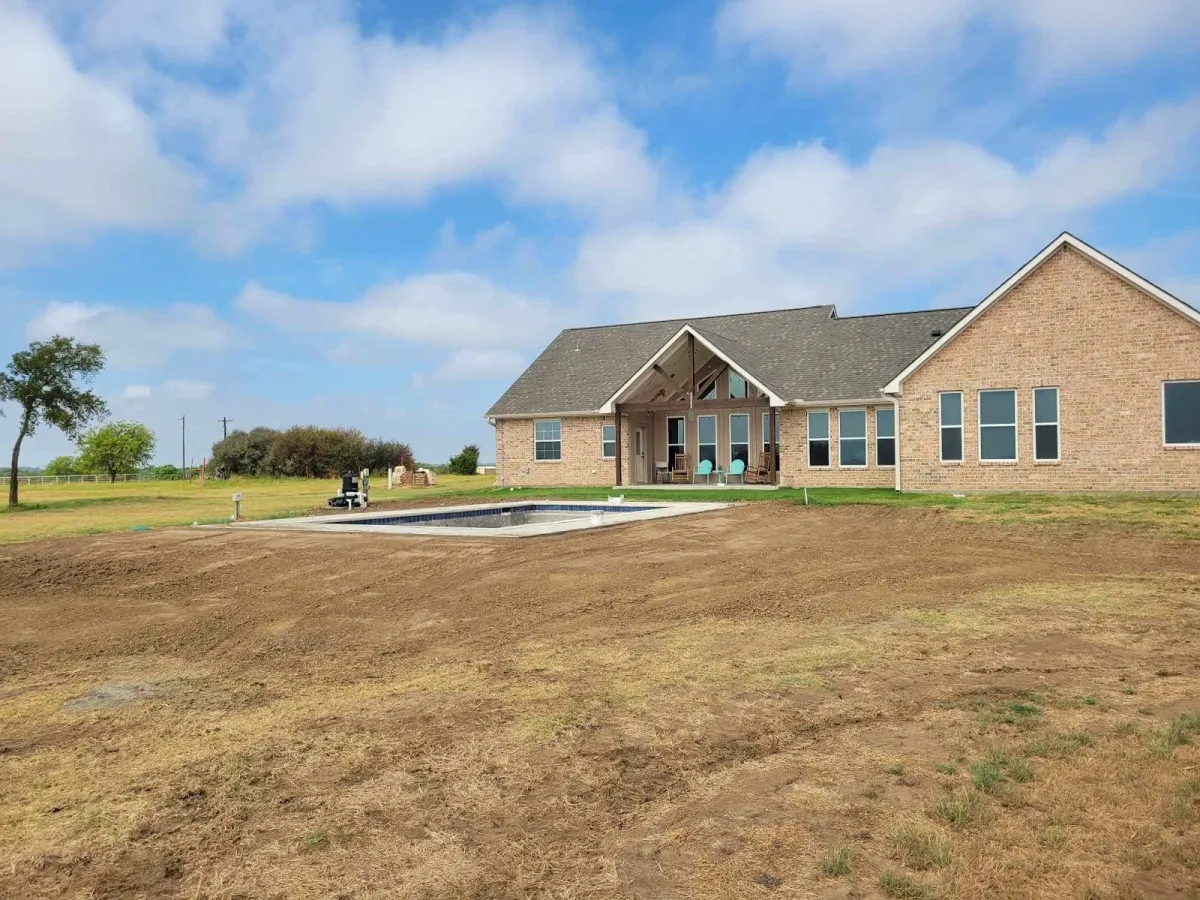
Recent project from our featured contractor
This is our featured contractor's own photo: finish grading behind a new brick home on open acreage, the ground smoothed and shaped across the whole yard.
Ground shaped to drain away from the house is the same work that keeps a gravel driveway from washing out.
Melody C. wrote: “[They] did an absolutely fantastic job on the grade work and pad for our new build. We also had them do our circle driveway in crushed asphalt and couldn't be happier with the results.”
Aubrey is growing fast. The city went from about 5,000 residents in 2020 to nearly 10,000 today, and communities like Sandbrock Ranch, ArrowBrooke, Union Park, and Paloma Creek are adding new construction at a pace that was unimaginable a decade ago. A lot of that new construction is on properties with long driveway runs, acreage lots, rural tracts, and estate-style parcels that were ranch land before the growth surge.
Installing a gravel driveway in Aubrey means working with the Aubrey Series soil, a clay-heavy formation with 40 to 60 percent clay content that the USDA named specifically for this area. That soil drains slowly, expands when wet, and contracts when dry. A driveway that ignores those properties will rut in the first wet spring and heave apart in the first dry summer.
Crushed limestone is the standard material for Aubrey driveways because it compacts directly on top of that clay base, bonds well, and resists displacement. Crusher run laid as the base layer gives you the structural depth the clay soil requires. Together, those two layers, compacted crusher run base and crushed limestone wearing surface, produce a driveway that handles Denton County's 39-inch annual rainfall and the temperature cycles that crack and shift softer base work.
What Goes Into a Properly Built Gravel Driveway
Site Preparation
Every driveway installation starts with clearing the path and establishing the correct grade. Where the route runs through brush, cedar or trees, the clearing is its own job; see land clearing in Aubrey. That means removing existing vegetation, rough grading the sub-base to finished elevation, and addressing any soft spots, buried debris, or areas where the ground has been disturbed previously. On Aubrey clay, proper site prep determines whether the base compacts correctly or settles unevenly over time. For larger rural parcels that need brush cleared or cedar removed before driveway prep can begin, land clearing in the Collin and Denton County area is available through Celina Land Clearing.
Compacted Road Base
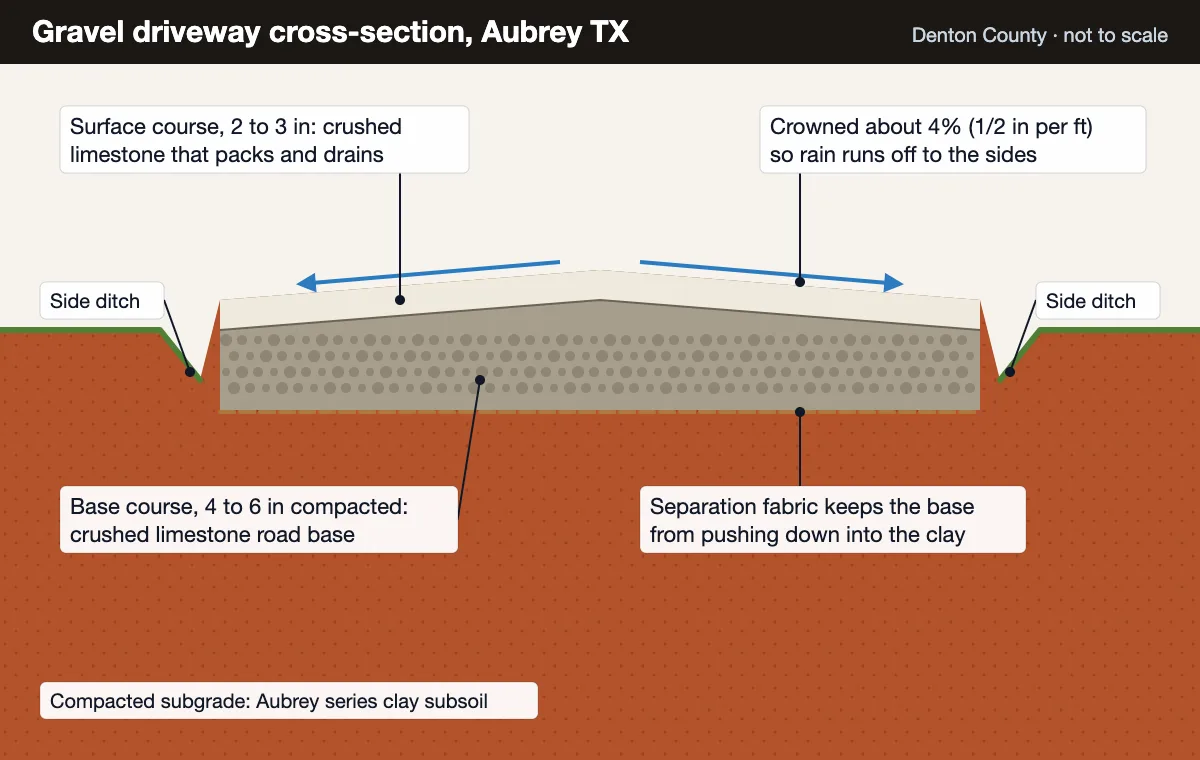
A 4-to-6-inch layer of crusher run is spread and compacted in lifts using a plate compactor or roller. This is the structural layer, it's what keeps the driveway from rutting under vehicle loads. On Aubrey Series clay, skipping or thinning the base layer is the single most common reason gravel driveways fail within the first two years. Don't let anyone skip it.
Crushed Limestone Wearing Surface
Two to three inches of crushed limestone goes over the compacted base. Crushed limestone's angular edges lock together when compacted, creating a dense, stable surface that resists scattering and ruts better than rounded gravel or pea gravel. Locally available from Denton Sand and Gravel in Sanger, it's the material of choice for most Denton County driveway contractors for good reason. Property owners doing similar gravel driveway work east of the DFW metro can find material and installation through gravel and road base in the Forney area via Forney Gravel Co.
Crown and Drainage
Every driveway is graded with a crown, slightly higher in the center than at the edges, so rainwater sheds off the sides rather than pooling on the surface or channeling along the centerline. On sloped sections, a drainage dip or water bar may be added to divert flow before it gains speed. Proper crown is one of the things that separates driveways that wash out in the first heavy rain from ones that hold up for years.
Culvert Installation
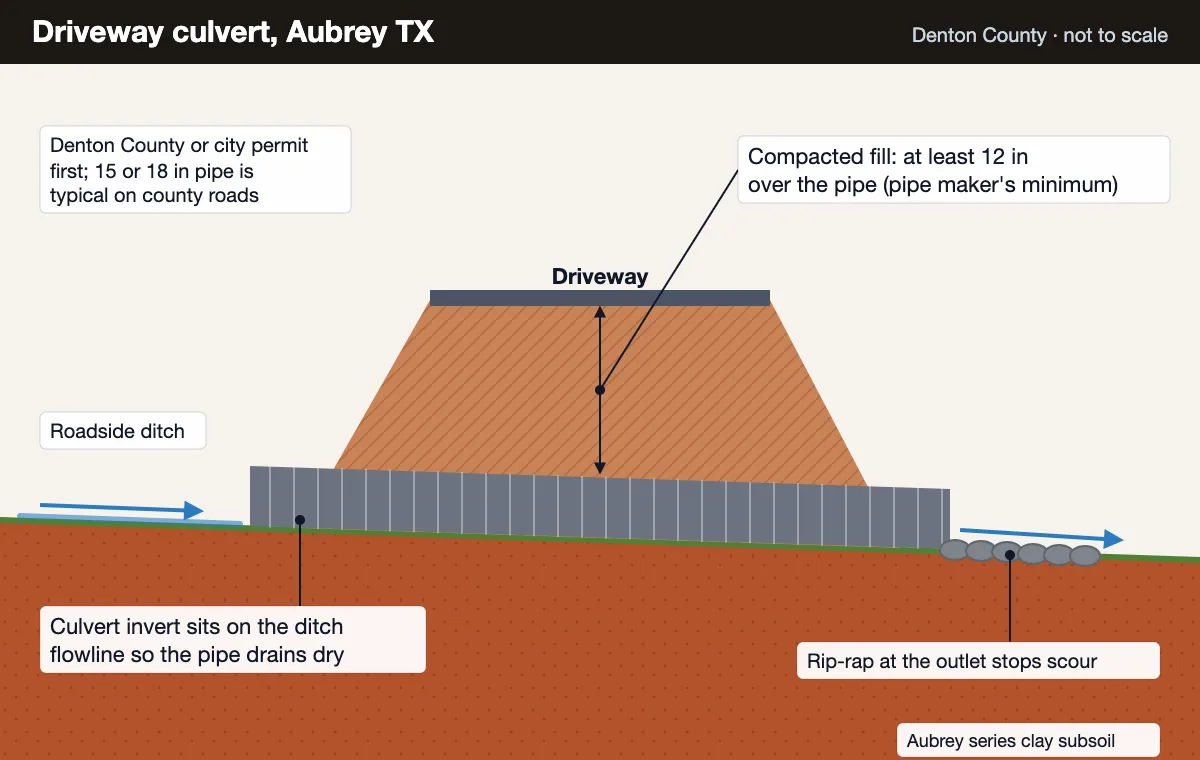
Any new driveway entrance onto a Denton County road requires a culvert where the driveway crosses the roadside ditch. The culvert keeps drainage flowing through the ditch while allowing vehicle access over it. Denton County issues culvert/driveway permits and the review takes up to 10 working days. The culvert is installed, backfilled and compacted to county standards. Driveways sharing an existing entrance typically don't require a new culvert.
- Site prep and rough grading
- 4-6 inch compacted road base
- Crushed limestone or crusher run top
- Crown grading for drainage
- Culvert installation (if needed)
- Final grade and cleanup
- Free on-site estimate
How a Gravel Driveway Gets Installed in Aubrey TX
The contractor walks the property, measures the driveway run, assesses drainage and identifies whether a Denton County culvert permit is required.
Existing vegetation is cut, rough grading brings the sub-base to finished elevation, and any soft or undermined spots are addressed before gravel goes down.
A 4-to-6-inch layer of crusher run is spread and compacted in lifts. This is the structural foundation that prevents rutting on Aubrey Series clay.
Crushed limestone is spread at 2 to 3 inches, crowned at the centerline, and tapered at edges so water sheds off rather than pooling on the surface.
Where the driveway meets the county road, a culvert is set in the roadside ditch, backfilled, and compacted for a clean, permit-compliant apron.
Ready for a New Gravel Driveway in Aubrey?
Free on-site estimate. The property gets walked and quoted flat before any work starts.